

Updated on: September 9, 2026
If you drive an off-road vehicle for work or weekend adventures, lighting quality can make or break your day. LED lighting for off-road vehicles upgrades visibility, improves scan range, and reduces power strain compared with many older bulb types. It also helps you spot hazards earlier, from ruts and rocks to wildlife and roadside debris. In this guide, you’ll learn what to look for, what to avoid, and how to choose the right setup for your terrain and driving style.
LED Lighting for Off-Road Vehicles: What to Improve Right Now
When you drive off paved roads, darkness is not just “low visibility.” It is the loss of timing. You need more useful light to read terrain, judge distance, and steer confidently. That is where LED lighting for off-road vehicles becomes a practical upgrade, not a luxury.
In simple terms, the right LED lights help you do three things better: see farther, see more clearly, and keep power draw manageable. Instead of scattering light in the wrong direction, modern LED systems can be aimed with tighter optics for specific jobs like long-range spotting, wider road-like coverage, or controlled work-zone illumination.
Before you buy, decide what problem you actually have. Is your current lighting too dim? Are you getting glare in fog or dust? Do you struggle to spot obstacles off to the side? Once you match beam pattern to your environment, the upgrade feels immediate.
Common Mistakes to Avoid
Even a high-quality LED can underperform if it is the wrong fit for your vehicle and your conditions. These missteps are common, and they waste money.
Choosing lights by brightness alone
Higher lumens often look impressive in a product photo. But real-world visibility depends on beam pattern, mounting height, and aiming. If the beam is not shaped for your terrain, you may create glare without gaining useful sight lines.
Ignoring voltage and electrical limits
Off-road vehicles can have different charging systems and wire setups. If you do not check compatibility, you can trigger flicker or premature failures. A stable power path matters as much as the LED itself.
Mounting without considering vibration
Rough roads shake everything. Loose fasteners, weak brackets, or cables that rub on metal can quickly degrade performance. Your goal is secure mounting and strain relief.
Skimping on correct aiming and alignment
Aiming is not just a “one-time” step. After installation, confirm the beam direction on a safe surface. Misalignment can reduce effective range and increase glare for oncoming traffic or trail partners.
Forgetting about weatherproofing
Dust, mud, water spray, and wash-down cycles all attack lighting systems. Look for enclosures designed for harsh conditions, and avoid exposed connections that can corrode.
Beam pattern comparison with fog and dust visuals
Pros & Cons Analysis
LED lighting for off-road vehicles can be a big step up, but it helps to weigh tradeoffs. Here is a balanced view.
Pros
- Sharper visibility: Beam optics help you see obstacles sooner and read ruts and rocks more clearly.
- Lower power draw: Many LED setups use energy efficiently, which helps protect your electrical system.
- Fast response: LEDs light up instantly, improving confidence when you change direction or drive over uneven ground.
- Better durability: Quality LED housings handle vibration and weather better than many older lighting types.
- More layout flexibility: You can combine spot, flood, and accent-style coverage depending on your routes.
Cons
- Wrong beam can be frustrating: If you pick a beam pattern that does not match your needs, the upgrade may feel underwhelming.
- Installation needs care: Secure mounting and clean wiring are critical for long-term performance.
- Aim and glare must be managed: Aggressive beams require correct alignment to avoid unwanted glare.
- Cost varies by build quality: Premium housings and optics cost more, but often pay off in reliability.
Quick Tips for Choosing the Right Lights
Use these practical steps to narrow down the best LED lighting setup for your off-road use.
Match beam type to driving task
- Spot-style beams: Great when you need more distance for trails, open fields, and rural roads.
- Flood-style beams: Ideal for wider scanning around the vehicle, loading areas, and slow navigation.
- Combo setups: A mix can cover both “distance reading” and “near-zone awareness.”
Plan your mounting points early
Look at your roof line, bull bar, and grille space. Proper mounting height and angle improve beam control and reduce wasted light.
Check ratings for dust and water exposure
Off-road life is messy. Choose lights designed for harsh conditions so mud and wash-downs do not turn into problems.
Choose wiring and controls that keep things stable
A reliable switch, proper relays, and protected connections help prevent voltage drops and overheating. The goal is consistent output over time.
Consider a complete lighting package
If you want a cohesive look and reliable compatibility, a planned lighting package can simplify choices. For example, explore lighting packages to find setups designed to work together.
Installation and Maintenance That Protect Performance
Great LED lighting for off-road vehicles starts with correct installation. If you do it well, the system performs through seasons and rough miles.
Use sturdy hardware and add strain relief
Secure brackets and proper fasteners reduce vibration fatigue. Route cables so they do not rub on sharp edges, and add strain relief near connectors.
Keep connections clean and protected
Moisture and dirt find weak points. Seal or protect connections where appropriate and avoid leaving junctions exposed.
Aim after installation, then re-check
After mounting, aim the lights on a safe surface. Re-check alignment after the first few drives, especially if your vehicle sees heavy vibration.
Clean lenses to protect output
Dirt buildup reduces effective light. Wipe lenses when they get caked with mud or dust, using safe cleaning methods that do not scratch the lens surface.
Tools, cables, and sealed connections in a checklist layout
Use Cases: Where LED Off-Road Lighting Delivers
LED systems are not one-size-fits-all. The best results come when you match lighting to real activities.
Farming and field work
Working around machinery often means uneven terrain, night-time inspections, and the need to see hazards at a safe distance. With focused beams and wider coverage, you can spot moving parts, check implements, and move more confidently across the field.
Trails, off-road driving, and recovery
Trail obstacles appear fast: ruts, rocks, and unexpected turns. A combination of spot and flood helps you see the path ahead and the sides where hazards hide. It also makes vehicle recovery easier when you need to assess the ground and align safely.
Industrial and site access
On sites with dust and debris, consistent light matters. LED setups can provide stable output with less heat stress than many traditional bulbs, helping you keep working through long shifts.
Roadside visibility and nighttime safety
If you drive rural routes where lighting is limited, you benefit from earlier hazard recognition. Proper aiming reduces glare risk while maintaining useful illumination.
Customer experience and real-world confidence
Many drivers choose LED upgrades because they feel the difference immediately. They mention clearer sight lines on dark tracks, fewer “mystery shadows” around obstacles, and less strain on the electrical system. While individual results depend on installation, vehicle setup, and beam selection, the overall theme is consistent: better visibility makes driving calmer and safer.
If you want to browse proven LED lighting options built for demanding environments, start with LED work lighting and compare beam styles and housings. For headlight-style upgrades, check LED headlights to improve front-end visibility without changing your entire vehicle layout.
Wrap-Up & Key Insights
Upgrading LED lighting for off-road vehicles is one of the most direct ways to improve night-time confidence. The best choice is not the brightest option; it is the beam pattern and installation that match your terrain and driving style. Avoid the common mistakes—like focusing only on lumens, skipping electrical checks, or ignoring aiming—so you get useful light instead of glare.
When you plan your mounting, choose weather-ready housings, and maintain clean lenses, your lighting system becomes a dependable part of your vehicle. If you are ready to upgrade, explore curated options on Lightcomm and select a setup built for tough conditions.
Shop now call to action: Choose the beam style that matches your off-road routes and build a lighting plan you can trust. Your next dark drive should feel easier—because you can see farther and act sooner.
Q&A
How do I choose the right beam pattern for off-road driving?
Start with how you drive at night. If you need distance for open trails or rural routes, prioritize a spot-style beam. If you want broader awareness around the vehicle for slow work or tight navigation, choose flood-style coverage. Many drivers prefer a combo layout to cover both near and far hazards.
Will LED lighting for off-road vehicles draw too much power?
LED systems are generally designed to use energy efficiently. Still, power draw depends on the specific model, number of lights, and your vehicle’s charging system. Confirm compatibility and use proper wiring and controls to maintain stable output.
Do I need to re-aim my lights after installation?
Yes. Aim the lights once you finish mounting, then re-check after the first few drives, especially if your vehicle sees heavy vibration. Correct alignment keeps the beam useful and helps limit glare.
Are LED lights safe to use in wet or dusty conditions?
Many LED units are built with weather-resistant housings and sealed connections for challenging environments. Choose products rated for dust and water exposure, and protect wiring routes so moisture cannot reach weak points.
Disclaimer: This article is for general guidance only. Always follow the manufacturer’s installation instructions and vehicle safety guidance. Lighting performance depends on mounting, aiming, electrical setup, and real-world conditions.
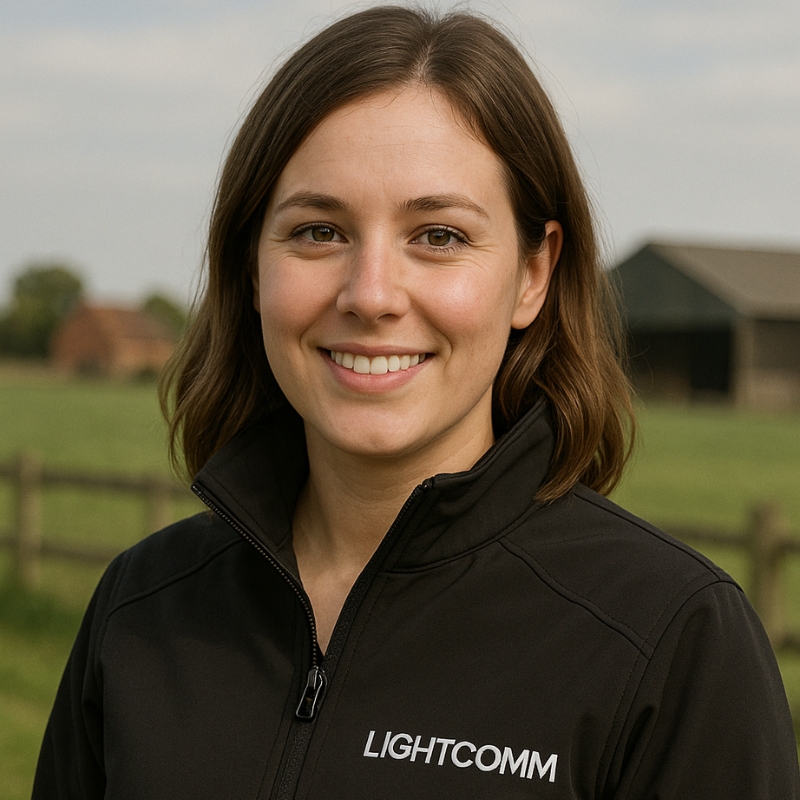
Orla Murphy writes for Lightcomm.ie, where she mixes farm life, tech talk, and a healthy dose of caffeine. When she’s not testing new lights or chatting with farmers, she’s probably wrangling her dog out of a muddy field or trying to convince her neighbours that radios are still cool.