

Updated on: 2025-12-31
Reliable communication keeps fieldwork moving, from silage and spraying to calving at night. This guide explains how to choose, install, and use rugged radios that work on tractors, quads, combines, and in the farmyard. You’ll see practical steps, proven tips, and product options that fit real rural conditions. We include recommendations for handhelds, vehicle-mounted sets, antennas, and nationwide push-to-talk solutions, plus clear calls to action so you can upgrade with confidence.
- 1. Introduction
- 2. Step-by-Step Guide to farm two-way radios
- 2.1 Map your coverage and terrain
- 2.2 Choose handheld, mobile, or hybrid
- 2.3 Pick VHF/UHF bands and antennas
- 2.4 Power, batteries, and charging
- 2.5 Program channels and call groups
- 2.6 Install mounts, mics, and speakers
- 2.7 Train the team and set protocols
- 2.8 Maintain, test, and log issues
- 3. Tips
- 4. FAQs
Introduction Paragraph
When fields stretch for miles and machines are in motion, clear audio is safety. That’s why many farms turn to farm two-way radios for instant, push-to-talk coordination that mobile phones can’t match in noise, rain, or patchy coverage. With the right combination of handheld units, in-cab mobiles, tuned antennas, and sensible channel plans, teams stay in sync during harvesting, slurry runs, fencing, and animal moves. This product-focused guide makes selection simple. You’ll learn how to map coverage, choose hardware, install quickly, and train crews so everyone communicates first time, every time. We’ll also point you to proven kits and accessories designed for rugged agri work, with straightforward steps and links to shop the essentials.
Step-by-Step Guide to farm two-way radios
Step 1: Map your coverage and terrain
Walk or drive your land and mark typical dead spots: behind tree lines, in hollows, around steel-clad sheds, and along distant paddocks. Note where tractors, handlers, and quads usually operate at the same time. If you need beyond-line-of-sight communication between distant blocks, consider nationwide push-to-talk over cellular as a supplement to traditional VHF/UHF. See nationwide coverage options to bridge blackspots and link yards, contractors, and remote fields on one talk group.
Step 2: Choose handheld, mobile, or hybrid
Handhelds offer flexibility on foot, around livestock, and hopping in and out of machines. Vehicle-mounted mobile sets deliver higher transmit power, better speakers, and convenient cab controls. Most farms benefit from a hybrid mix: handhelds for ground teams and a mobile unit in each key machine. A proven starting point is the Kenwood NX-1700 agri kit, a robust in-cab setup with clean audio, simple operation, and dependable range for large acreages.
Step 3: Pick VHF/UHF bands and antennas
VHF often travels farther in open country, while UHF can handle reflections around buildings and tight yards. The antenna matters as much as the radio: a tuned, properly mounted aerial can transform clarity and reach. On tractors or telehandlers, a spring-loaded antenna reduces damage from branches and shed doors. Consider this durable VHF antenna to protect your investment and keep signals consistent over rough ground and long days.
Step 4: Power, batteries, and charging
For handhelds, choose high-capacity batteries and a charging routine that fits your schedule. Multi-bay chargers help crews swap packs without downtime. For vehicles, wire mobiles to a clean power source with correct fusing, avoiding circuits that cut off during cranking. To outfit foot crews, browse handheld radios with rugged housings, glove-friendly controls, and long runtimes suitable for winter workloads.
Step 5: Program channels and call groups
Organize call groups by task and role: e.g., Harvest, Livestock, Yard, and All-Call for emergencies. Use privacy codes where available to minimize chatter from neighboring users. Keep channel naming identical across every unit to avoid confusion. Pre-program a “Quiet” channel for operators who need focus and a “Load-Out” channel for stock trailers and deliveries.
Step 6: Install mounts, mics, and speakers
Mount mobile radios where drivers can glance and reach without leaving the seat area. Use vibration-resistant brackets and route cables away from sharp edges. Add an external speaker near ear level for noisy cabs and a fist mic with a curly cord that won’t snag. On quads or UTVs, weatherproof pouches and remote push-to-talk switches improve safety and ease of use.
Step 7: Train the team and set protocols
Create a plain-language radio policy: short sentences, confirm critical instructions, and use names before messages. Agree on handovers at shift changes, and encourage a daily radio check before engines roll. Practice radio silence for calm during tricky maneuvers and a quick emergency call format that everyone remembers under stress.
Step 8: Maintain, test, and log issues
Dust, rain, and jolts are part of farm life—so schedule quick weekly checks. Wipe contacts, inspect cables and antenna mounts, and verify every channel transmits and receives. Keep a small log of problems and resolutions to spot patterns, like a failing battery or known dead zone that needs an antenna tweak or a coverage add-on.
Tips
- Standardize channel names across the fleet so everyone speaks the same “language.”
- Use noise-cancelling mics or external speakers for loud cabs and open machinery.
- Color-code radios by team (e.g., yard vs. field) to prevent mix-ups at dawn.
- Keep one backup handheld fully charged in every main tractor or combine.
- Label chargers and battery packs; rotate them to extend overall lifespan.
- Store a spare antenna and mic; these small parts keep you online during peak season.
- Set a monthly “range walk” to confirm coverage before busy windows like harvesting.
- Combine local VHF/UHF with push-to-talk over cellular when fields are miles apart.
Ready to streamline comms? Choosing farm two-way radios is simple when you follow the steps above: pick the right mix of handhelds and in-cab units, add a tuned antenna, program smart channels, and train the crew. Select durable gear once, and your team moves faster, safer, and with fewer mistakes all year.
FAQs
How far will radios reach on mixed terrain?
Range depends on line of sight, antenna quality, and local interference. In open fields with a good VHF antenna on a tractor roof, expect strong performance across typical farm blocks. Around steel sheds, trees, and rolling ground, range shortens. Improve reach with a tuned spring-loaded antenna, an external speaker for clarity, and smart channel planning. If you need to connect distant outfarms, add a push-to-talk over cellular solution to bridge gaps.
Do I need a license?
Licensing varies by country and frequency band. Some bands are license-free with power limits; others require a simple registration. Always check local communications regulations before transmitting. If you’re unsure which route fits your operation, speak with a reputable supplier who can match equipment to your region’s rules and your coverage goals.
Which is better: handhelds or vehicle-mounted units?
Handhelds excel for on-foot work, quick gate checks, and moving livestock—lightweight, always with you. Vehicle-mounted radios provide higher output power, bigger speakers, and glove-friendly controls, perfect for tractors, sprayers, and combines. Most farms adopt both: mobiles in key machines for backbone coverage and handhelds for flexibility on the ground, with the same channels programmed across every device.
CTA: Equip your fleet with proven gear. Start with a robust in-cab mobile, add flexible handhelds for ground teams, and finish with a tuned antenna. Explore rugged in-cab kits, handhelds, and coverage add-ons above to build a system that works first time, every time.
Disclaimer: Always follow local communications regulations and manufacturer instructions. Compatibility, features, and performance depend on your environment, installation quality, and correct usage.
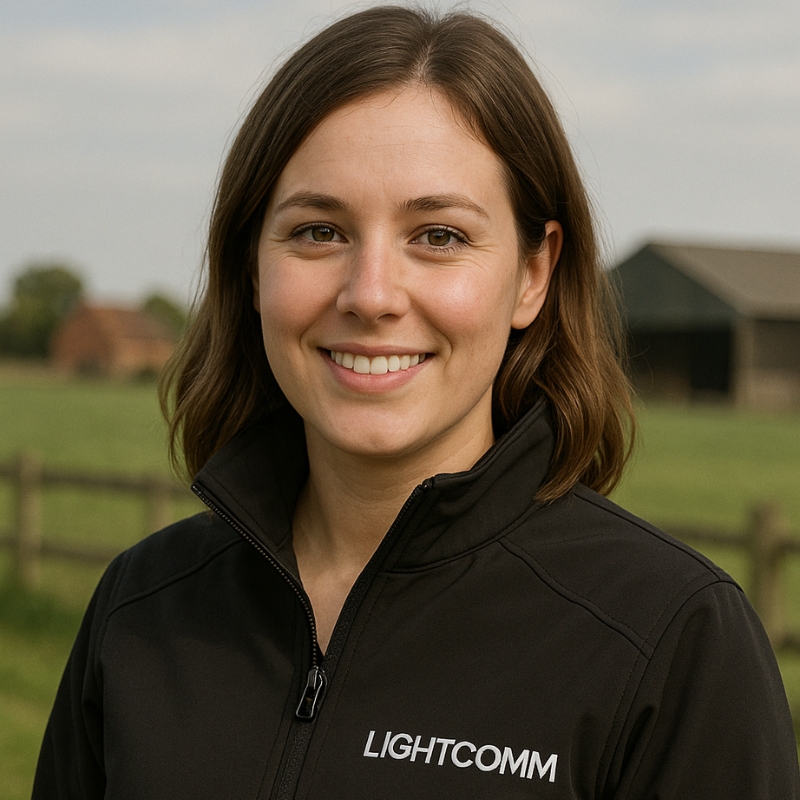
Orla Murphy writes for Lightcomm.ie, where she mixes farm life, tech talk, and a healthy dose of caffeine. When she’s not testing new lights or chatting with farmers, she’s probably wrangling her dog out of a muddy field or trying to convince her neighbours that radios are still cool.