

Updated on: 2025-12-24
Looking to upgrade your machines for safer, faster work after dark? This guide shows you how to choose and install 12v 24v LED work lights that fit tractors, 4x4s, telehandlers, and vans without headaches. You’ll learn which beam patterns to use, how to wire for long-term reliability, and what to buy for tough farming and construction jobs. We also share expert tips, real-world setups, and quick answers to common questions so you can shop with confidence today.
- Introduction
- Did You Know?
- Dual-voltage LED work lights
- Fitment and beam patterns
- Durability and weather resistance
- Power draw and wiring
- Expert Tips
- Real-World Setups and Bundles
- Personal Anecdote
- Summary & Takeaways
- Questions & Answers
- Are these lights road-legal?
- How bright should my work lamps be?
- Do I need extra relays or upgraded wiring?
Introduction
When productivity depends on early starts and late finishes, your lighting can make or break the day. Upgrading to modern, dual-voltage LED work lamps transforms visibility, trims downtime, and boosts safety around people, livestock, and equipment. With crisp white output, targeted beam control, and rugged housings, the right setup helps you see more and strain less—whether you are loading bales, fixing fences, or pouring concrete before dawn.
This buying guide is designed to make your decision simple. We cover compatibility across mixed fleets, trusted mounting options, and the wiring choices that keep your electrics protected. You will also find curated product suggestions and bundles for tractors, telehandlers, and utility vehicles—so you can move from research to install with absolute confidence.
Did You Know?
- Neutral white output around 5,000–6,000K helps reduce eye fatigue versus harsh blue tones.
- Flood beams are ideal for close-range area lighting; spots stretch distance down tracks and lanes.
- Look for IP67 or IP69K ratings for resistance to water, dust, and high-pressure washdowns.
- Quality lamps include EMC (e.g., ECE R10) filtering to minimize radio interference.
- Die-cast aluminum housings and polycarbonate lenses stand up to vibration and impacts.
- Deutsch DT connectors resist moisture and simplify plug-and-play retrofits.
Choosing 12v 24v LED work lights for any machine
Dual-voltage compatibility means one lamp fits tractors, loaders, telehandlers, and trucks across your yard. Whether your kit runs 12 volt or 24 volt, a quality driver automatically regulates input, protecting the diodes from voltage fluctuation. That saves you time, simplifies spares, and helps standardise lighting across brands and models.
Beyond voltage, focus on the jobs you do most. Yard work benefits from broad, even flood beams that fill in shadows around attachments and steps. Roadside callouts and forestry lanes call for long-throw spot beams to pick out distance hazards. Many operators blend both: floods on corners and cabs, a pair of spots out front, and a tight beam at the rear to guide reversing without glare.
Fitment and beam patterns
Measure your mount points and check for common bracket styles like pedestal, side-mount, and bolt-through. Compact housings fit crowded cabs and loader arms, while larger bodies suit rooflines and bull bars. For most agricultural work, a 60–90 degree flood on the cab corners plus a narrow spot up front gives a balanced field. On telehandlers, keep floods near the boom base and add one high-mounted spot to see attachment pins clearly.
Want a simple, machine-specific upgrade? Explore ready-made options like the corner work light set tailored to popular models. It streamlines installation and ensures the beam lands exactly where operators need it.
Durability and weather resistance
Look for robust housings with sealed gaskets and a corrosion-resistant finish. If you pressure wash often, IP69K is worth it. Check for stainless fasteners and UV-stable lenses to prevent hazing over time. In rough terrain, vibration damping and reinforced brackets help the light hold aim. Finally, ensure EMC compliance so your radios and GPS keep working without interference during long shifts.
Power draw and wiring
LEDs draw less power than old halogens, but wiring still matters. Use tinned copper cable, sealed connectors, and heat-shrink to keep moisture out. A fused relay harness off a clean power source protects the loom and preserves switchgear. When retrofitting cabs, run loom paths along existing channels and avoid sharp edges. The goal is a factory-level finish that resists chafing and the elements, season after season.
Expert Tips
- Mix beams: floods for immediate work areas, spots to reach gateways and tracks.
- Aim slightly down to cut glare and keep reflections out of mirrors and glazing.
- Standardise connectors (e.g., Deutsch DT) across your fleet to speed swaps.
- Use a relay with a suitably sized fuse; do not rely on the dash switch alone.
- Test polarity and voltage at the plug before final mounting.
- Pair work lamps with an amber beacon for visibility around yards and roads.
- Choose neutral white output for better depth perception in rain and fog.
Real-World Setups and Bundles
If your machines move between field work, road runs, and yard tasks, you need flexible, dependable lighting. Start by mapping where shadows slow you down: loader tips, rear hitches, steps, and drawbars. Then place lamp pairs to remove those shadows with even, glare-free coverage.
For a fast start, browse our curated LED work lighting collection. It includes compact floods for cabs, long-range spots for front mounts, and high-output options for larger machinery. If you want a turnkey approach, consider our purpose-built lighting packages designed to balance output, draw, and beam spread from the first switch-on.
Operators regularly tell us that targeted upgrades speed up jobs safely. “We fitted cab-corner floods and a narrow spot up front. Hitching at night is now straightforward, and we no longer over-illuminate the cab,” one customer shared. Another noted, “The old halogens struggled in drizzle. The new neutral-white LEDs cut through mist, and the wiring hasn’t missed a beat.” These are the small changes that stack up to real productivity.
For tractor-specific retrofits, model-matched kits like the corner work light set can save hours. They deliver neat beam placement and tidy fitment where space is tight. If you operate across brands, check our article on durable tractor work lights for extra tips on placement and glare control.
Telehandlers benefit from a split strategy: wide floods pointed at pallet positions and a focused spot down the boom for better depth perception. On pickups and UTVs, combine hood or roof spots with bumper floods for both reach and spread, keeping beams low to avoid stray glare. In forestry or livestock yards, amber warning lights help others see you moving—especially around corners and tight lanes.
Finally, think long-term serviceability. Using the same connector style and mounting hardware across your fleet makes replacements quick. It also lets you move lamps between machines as needs change. Stock a couple of spare brackets, Deutsch connectors, and a pre-made relay harness to keep downtime near zero.
Personal Anecdote
I once helped a contractor who was losing time every evening stacking bales. His old lamps created a bright hotspot but left the loader tips and trailer bed in shadow. We swapped in two wide floods on the cab corners and a tight spot high on the front. The next night, he called to say, “I’m done twenty minutes earlier, and I’m not fighting glare anymore.” Small changes, big difference to the workflow.
Summary & Takeaways
- Choose dual-voltage lamps to standardise across mixed fleets and simplify spares.
- Blend floods and spots to cover both near-field tasks and distance visibility.
- Prioritise IP67/IP69K, EMC compliance, and robust housings for longevity.
- Protect your loom with fused relays, sealed connectors, and tidy routing.
- For easy wins, start with corner floods and one forward-facing spot.
- Shop curated kits and machine-specific options to install with confidence.
Ready to upgrade? Explore our lighting packages or pick individual lamps from the LED work lighting range to build your perfect setup today.
Questions & Answers
Are these lights road-legal?
Work lamps are designed for off-road and task lighting. That means they are ideal for fields, yards, sites, and private roads. If you plan to use auxiliary lighting on public roads, check local regulations and ensure any forward-facing lamps are compliant and correctly switched off when not permitted. For on-road driving beams, choose approved headlight or lightbar products and wire them to dedicated, legal controls.
How bright should my work lamps be?
It depends on the job and mounting height. For close-range tasks like hitching or cab steps, compact floods with moderate output reduce glare and improve contrast. For long-range visibility down lanes, a pair of focused spot beams does the heavy lifting. Many operators mix both: moderate floods for near-field, and higher-output spots for reach. Beam quality and placement matter more than chasing the highest lumen number.
Do I need extra relays or upgraded wiring?
Yes, use a fused relay harness for reliability and safety—especially when adding multiple lamps. It protects switches and reduces voltage drop. Choose sealed connectors, tinned copper cable, and heat-shrink for moisture protection. Route cables along factory paths and away from sharp edges. This approach delivers a durable, “factory finish” install that stands up to vibration and weather.
Will these lights interfere with my radios or GPS?
Choose lamps with EMC compliance to minimise electrical noise. Quality drivers and proper grounding reduce interference. Keep signal cables and antenna leads separate from power runs where possible, and ensure good chassis grounding points. This helps radios, GPS, and other electronics operate clearly even with multiple lights on.
What if I switch machines often?
Standardise on the same connector type and carry a few spare brackets. Dual-voltage drivers let you move lamps between 12 and 24 volt machines easily. Consider machine-specific kits for your most-used equipment to save installation time, and keep one universal pair on hand for backup.
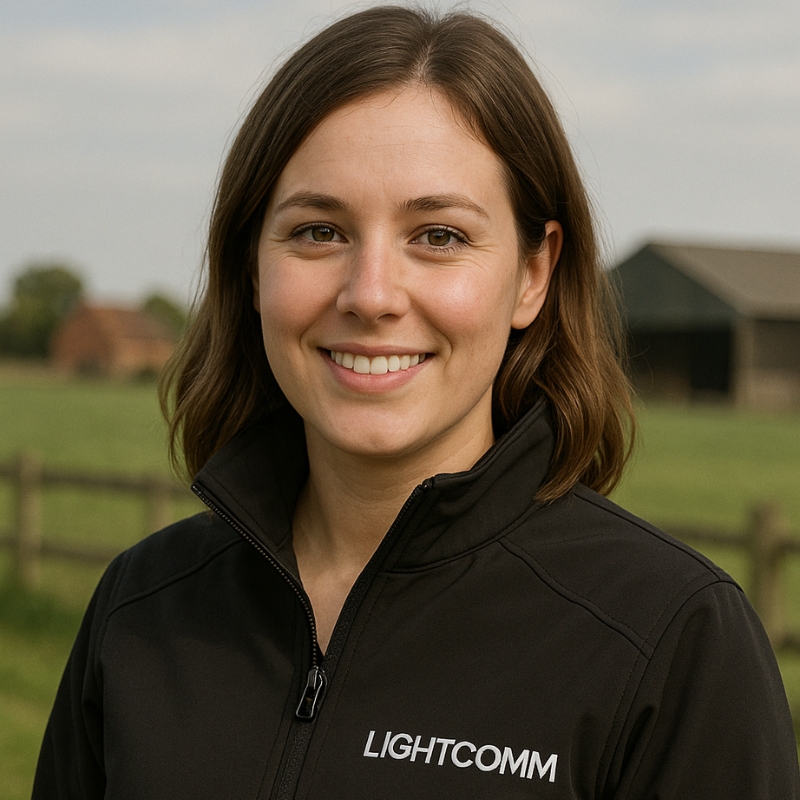
Orla Murphy writes for Lightcomm.ie, where she mixes farm life, tech talk, and a healthy dose of caffeine. When she’s not testing new lights or chatting with farmers, she’s probably wrangling her dog out of a muddy field or trying to convince her neighbours that radios are still cool.